
Today I am talking about Brontë Parsonage Museum. I visited the museum recently because I saw that Kelly (this is her blog) started reading one of the books written by a Brontë sister. Kelly will review the book in the next few days, so do check her blog if you are curious. I’ve been to Haworth before, but it was too late to have the time to properly see the whole museum and I said “next time” and, funnily enough, years passed. I am sharing a lot of pictures, 29 of them, with the Parsonage and the church. It is worth visiting and Haworth is just a lovely place to see, so we might go there again, considering that our tickets are valid for a year.

The guide was so lovely and she closed the door so I could take a great picture of the house.
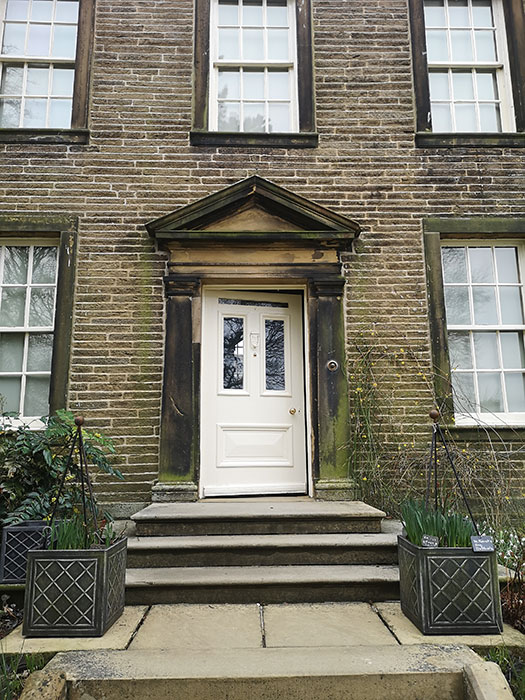
This is the main entrance and the one that the visitors use as well.
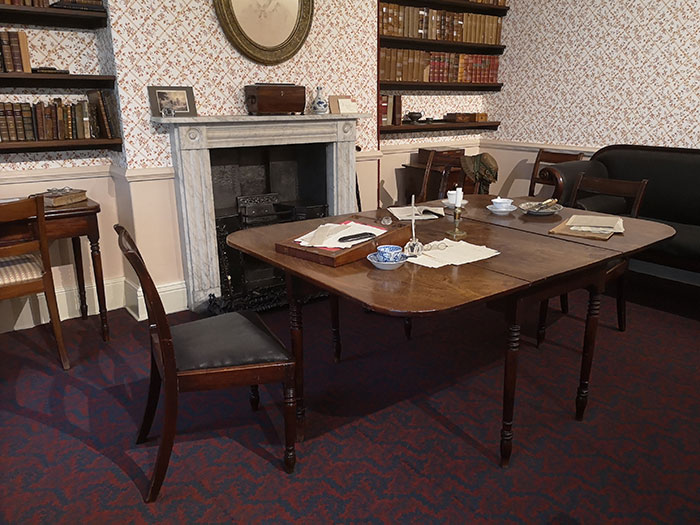
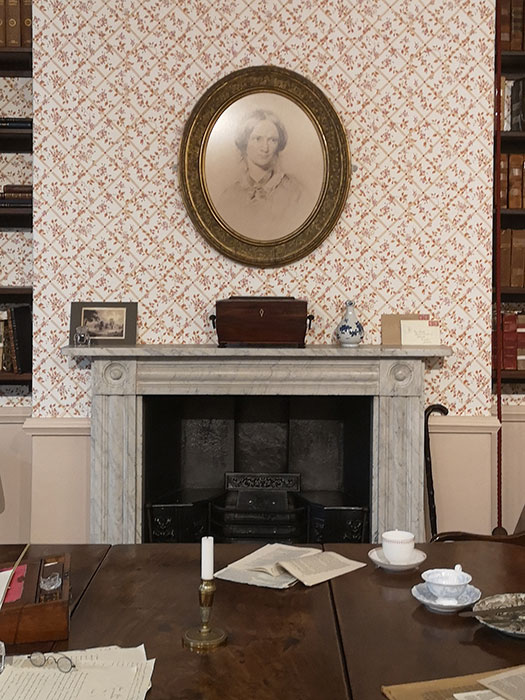
This is the dining room, where Charlotte, Emily, and Anne wrote their novels. In the evenings they will discuss their writings. Emily might have died on the sofa in this room. Charlotte refurbished this room in 1850. In the picture below you can see a portrait of Charlotte, a reproduction of the one by George Richmond.
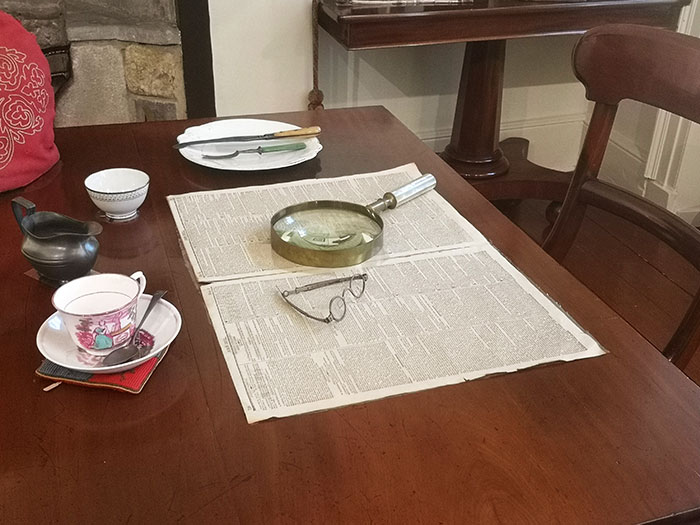
This is Mr. Brontë’s study, where he did his parish business and taught the children. The magnifying glass is the one that he used in his lifetime.
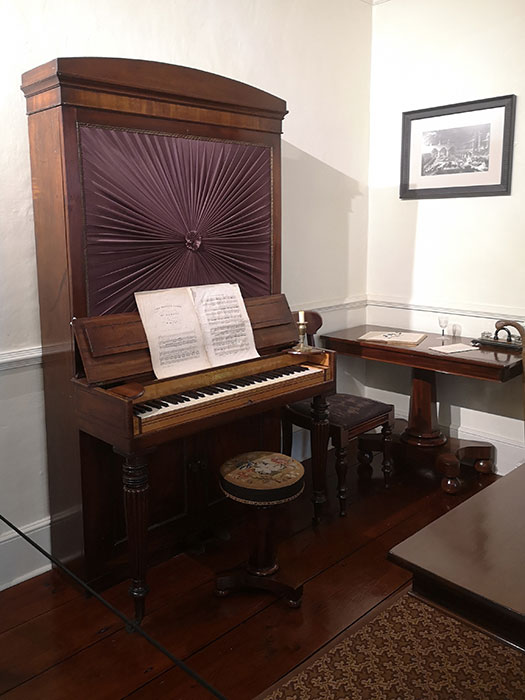
The cabinet piano was purchased by Mr. Brontë and it was played by Emily and Anne.
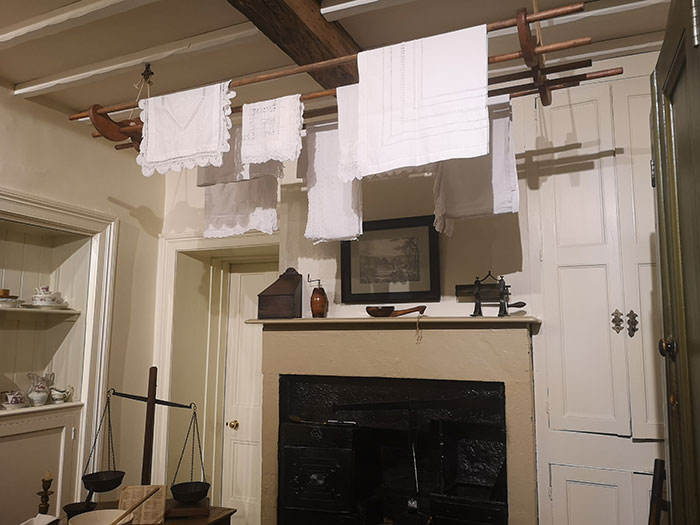
The kitchen is on the ground floor, quite close to the dining room and the study. While they had a servant or two, the sisters were expected to do household tasks. With so many people living in the house, it is understandable that 1-2 servants couldn’t do all the work themselves. Emily would bake bread and do the ironing. There was another kitchen in the back for laundry. The items on display in the kitchen were used by the family.

The rooms are quite small.
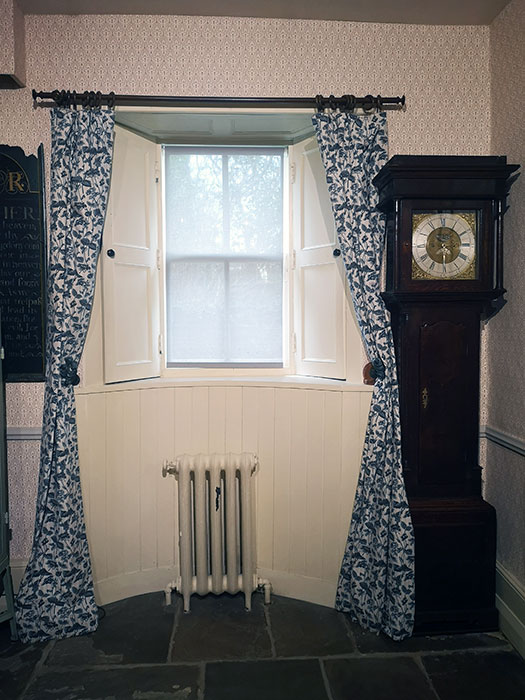
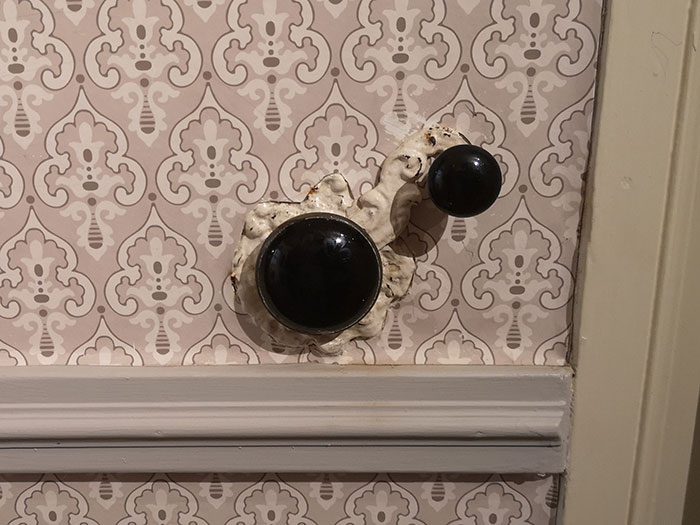
This room was converted to a study in 1854 for Mr. Nicholls, just before his marriage to Charlotte. It was a storeroom before that. He helped Mr. Brontë with his duties. The wallpaper, which is more clear in the picture below, is a reproduction of a scrap of wallpaper used by Charlotte, which now is in the New York Public Library. The lever is for summoning the servant.
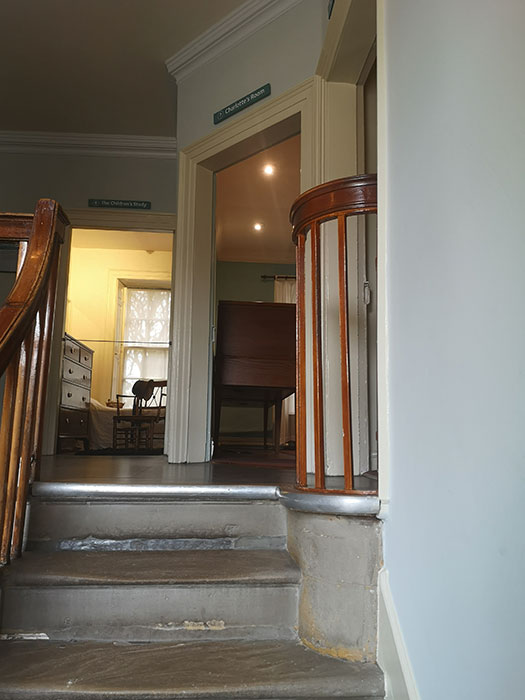
Upstairs are the bedrooms and a museum showing artefacts.
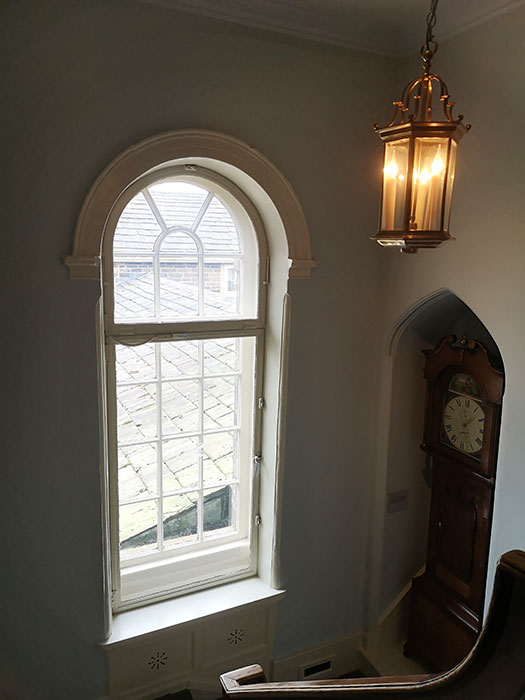
The staircase is lovely and, on the right, you can see a clock which was used by the Brontë family.
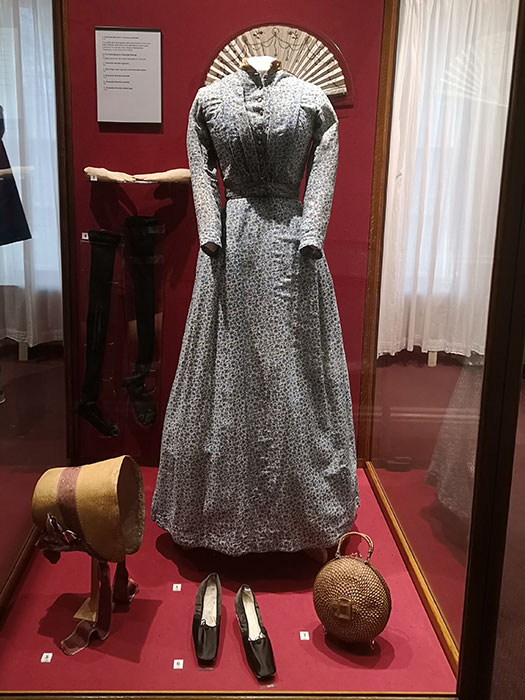
All these were used by the Brontë sisters. The Thackeray dress was Charlotte’s, the one she wore for a dinner party hosted by Thackeray in 1850. Everything in the display, with the exception of the stockings, were Charlotte’s. The stockings were of one of the sisters, but it is unclear which one.
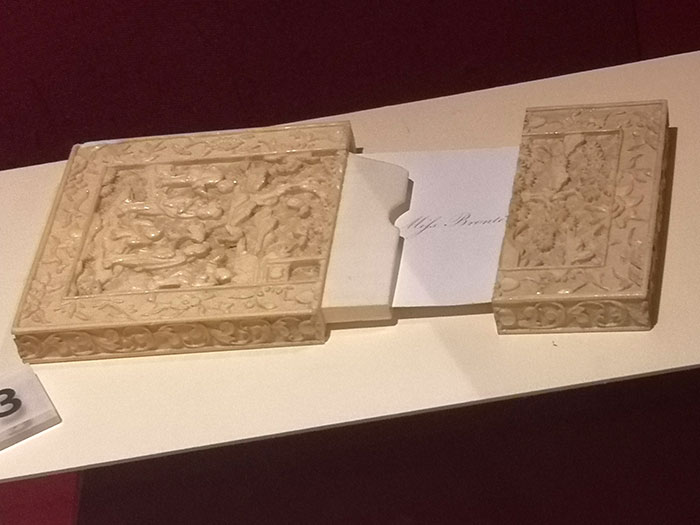
Charlotte owned the calling-card case made out of ivory.
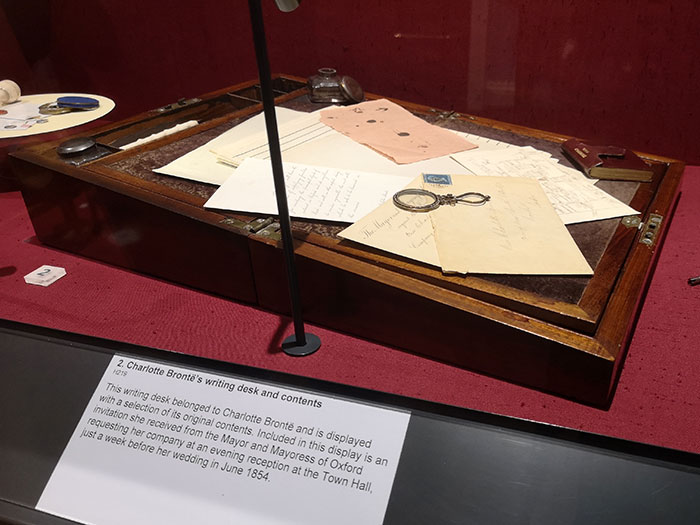
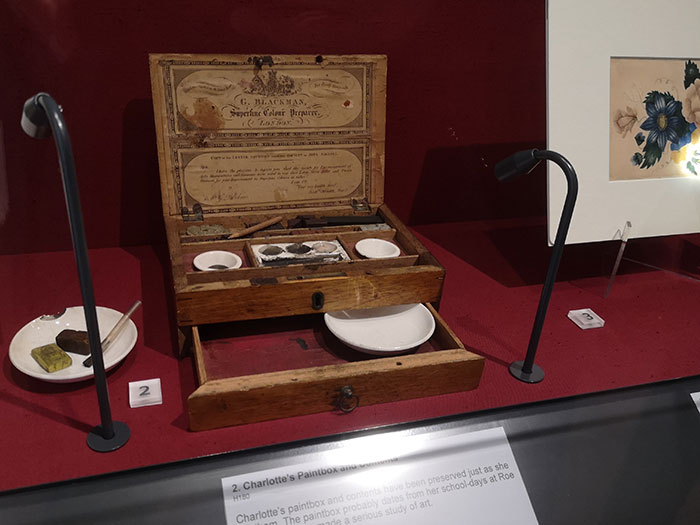
Charlotte’s paintbox and two of her watercolours are on display. The flowers she painted, partially visible on the right, are from 1832-1833.
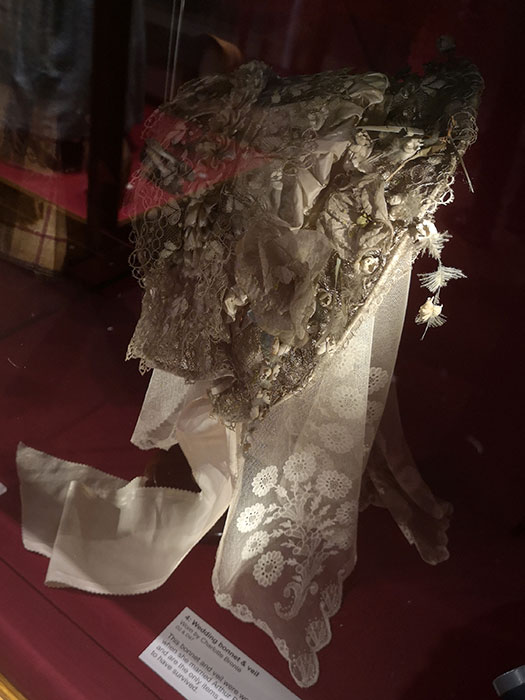
Charlotte’s bonnet and veil which she wore at her wedding with Nicholls in 1854.
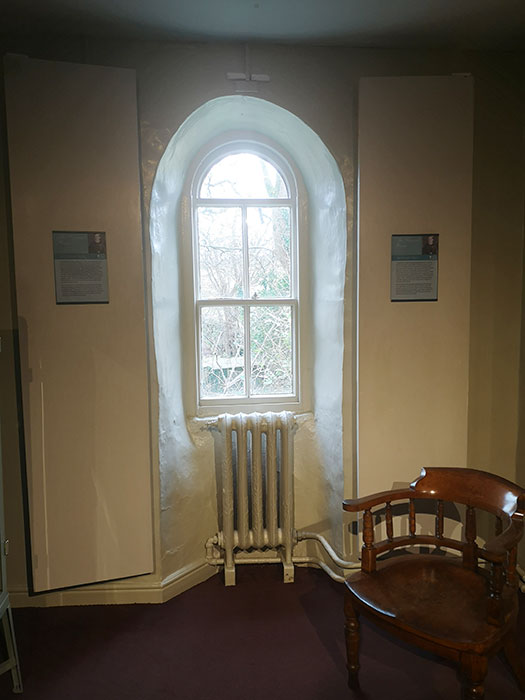
This was the servant’s room, on the same level with the other bedrooms, a good size, and with a lovely view. They had 1 or 2 live-in servants. The Garrs sisters accompanied them from Thornton. They were followed by Tabitha Aykroyd, from Haworth, who worked for them for 30 years and died shortly before Charlotte, in 1855. Tabitha’s daughter worked at the Parsonage for 6 more years, until Mr. Brontë’s death in 1861. It is clear how close the servants and the family were.
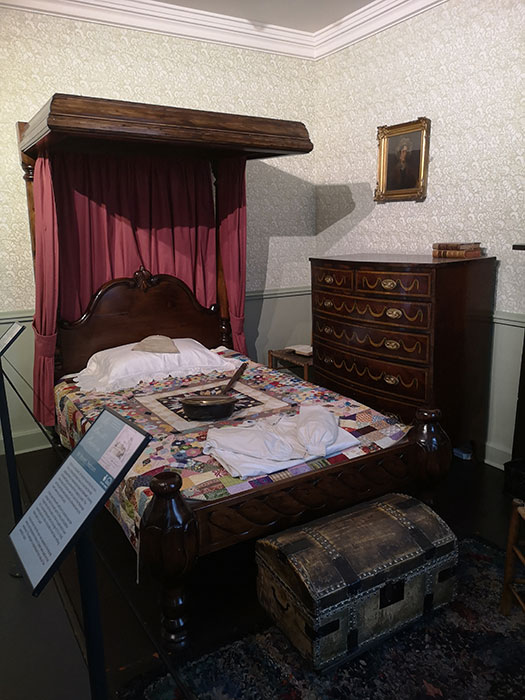
Mr. Brontë’s bedroom. He moved in this room after his wife’s death. The bed is a reproduction. His son, Branwell, died in 1848, aged 31. He was an alcoholic and his father brought time to this room, so he could watch him. Branwell could have put others or himself in danger.
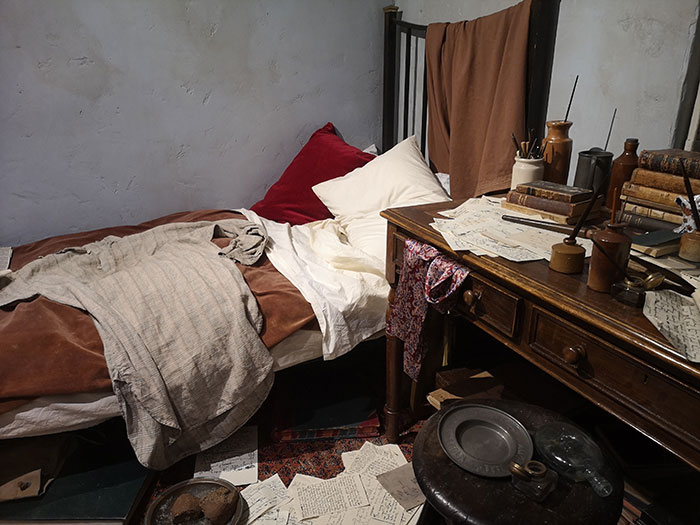
Branwell’s room, a view of how it would have looked in the 1830s.
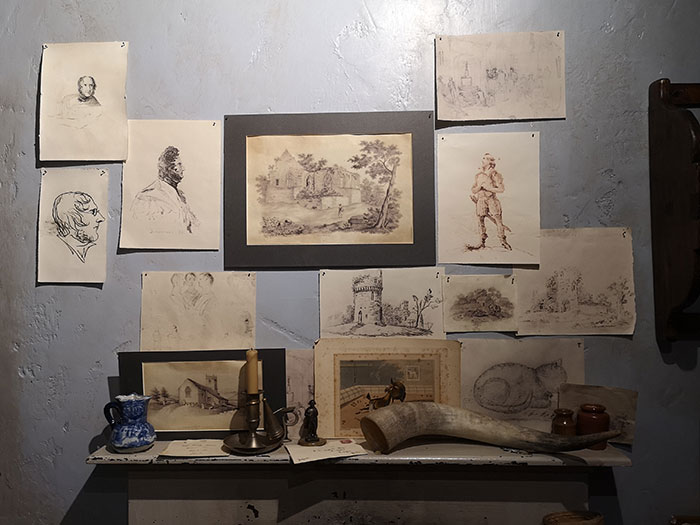
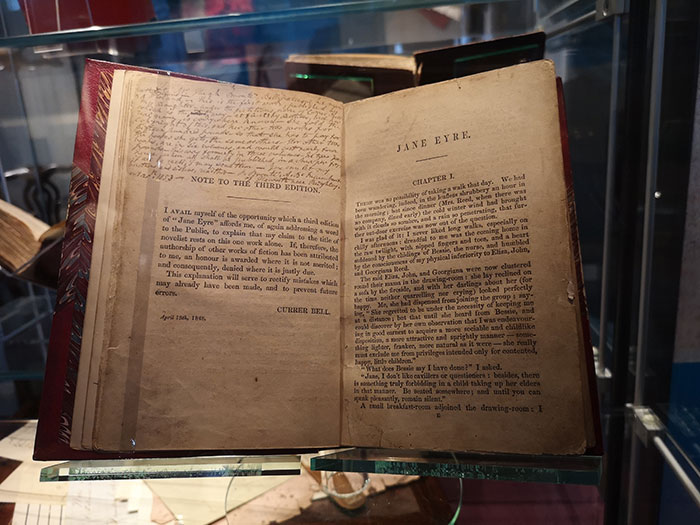
In the last part of the museum there are a lot of artefacts on display and I picked a few to highlight. This copy of Jane Eyre has a dedication written by Mr. Brontë to his brother Hugh, in Ireland. It is clear that he was so proud of his daughter as he told his brother to lend the book to other relatives.
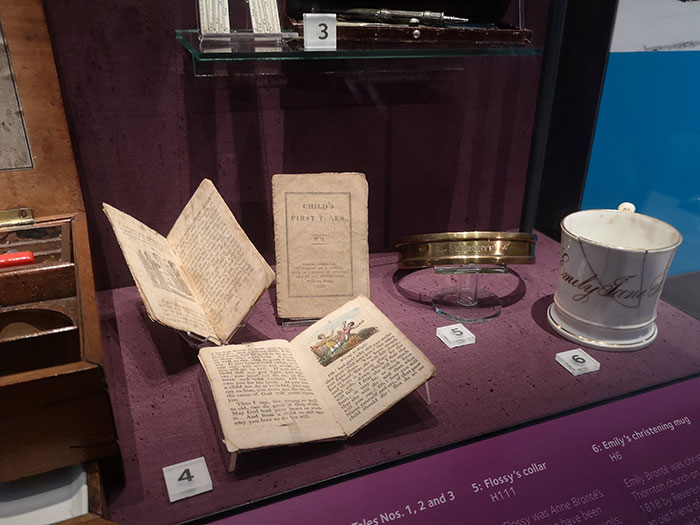
On display there are a lot of interesting things, including a dog collar.
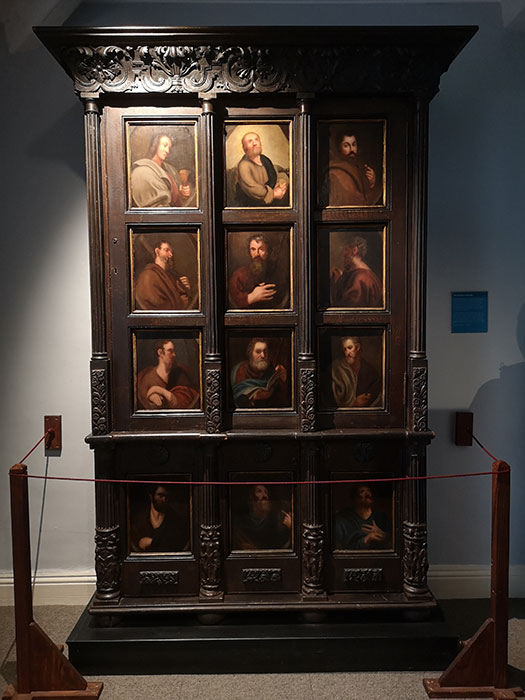
The Apostles’ cupboard impressed Charlotte when she visited Thomas Eyre of Hathersage in 1845. This cupboard is described in the book.
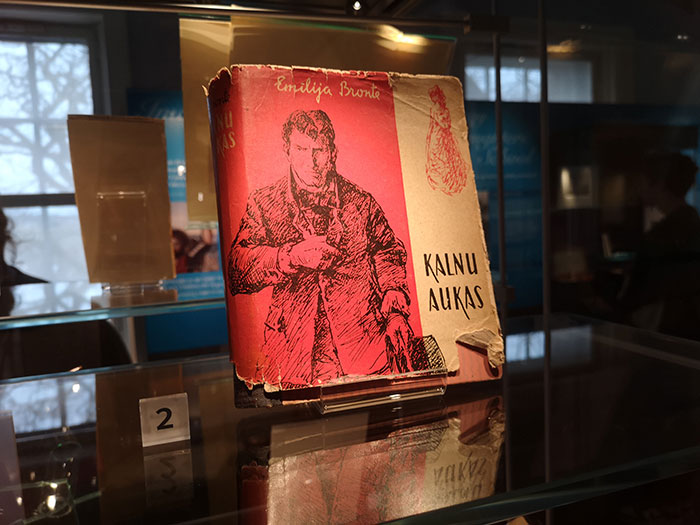
This is the first Latvian edition of Wuthering Heights, from 1960. It was one of the few books allowed to be translated into Latvian while they were under russian occupation and part of the soviet union.
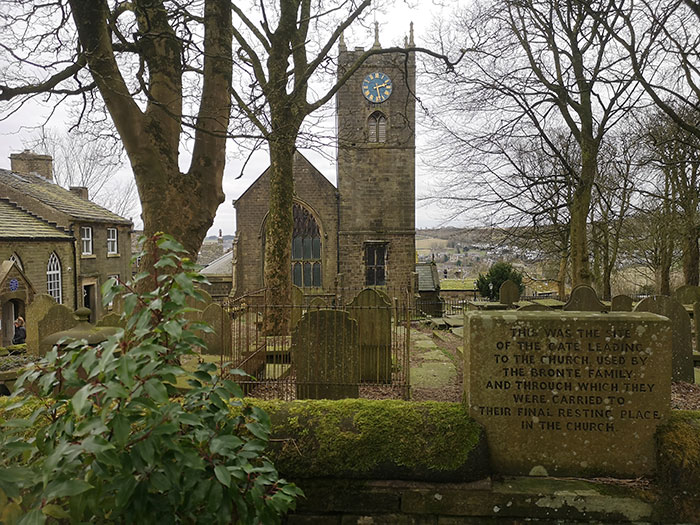
The gate towards the church is no longer there, but it is marked on the stone you see on the right of the picture.
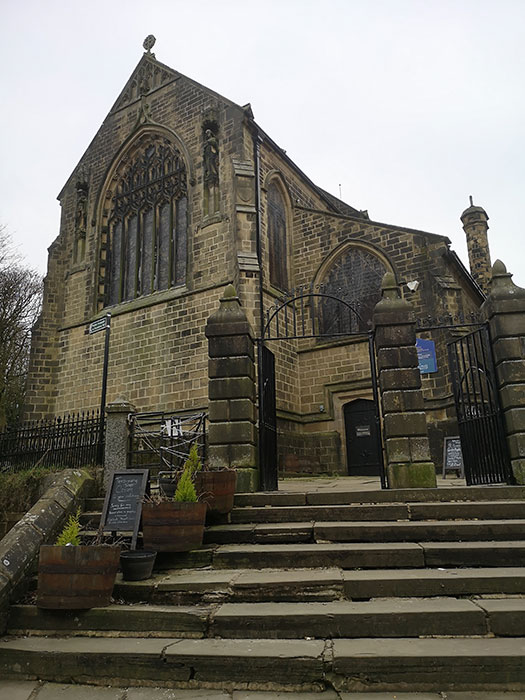
The church is free to visit.
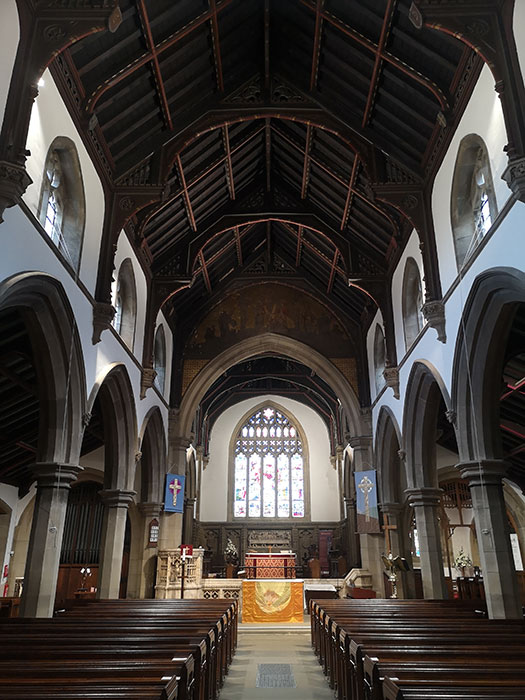
It is a beautiful small church. The wooden panels are decorated and there are details about the tombs of the Brontë family.

In the family vault are buried: Patrick and Maria (the parents), Maria and Elizabeth (two pre-teen sisters who died in 1825), Branwell, Emily, and Charlotte. Branwell and Emily died in 1848, while Anne died in 1849. To spare her father the suffering of burying another children, Charlotte took the decision that Anne should be buried where she died, in Scarborough.
Visiting the museum is showing a loving family which had so many tragedies. The mother died in 1821, at 38. Two of the six children died so young, 10 and 11, while three of the other children died at 29, 30, and 31. Charlotte lived the longest, but she died soon after getting married, while pregnant, at 38, same age as her mother. I was surprised to see that Charlotte’s husband remained at the Parsonage to help his father in law. That is saying so much about the real love the family shared and the strong connections they had.


This was a wonderful post. I Iearnt a lot about the family and their home. Poor Father to lose so many children young. The house is well presented.
I was in Bronte house at school.
Thank you for a lovely visit. Here by the way of Kelly’s blog.
Jeanie recently posted…March Tides
This is a wonderful post with so many good photos! I love seeing so many original items. I wonder if they keep that piano in tune? I think my favorite item shown is the ivory calling card case. Would you believe I actually have calling cards from my childhood and from when I first married?! They were used not for “calling”, but for including with wedding/shower gifts.
Thanks for the collaboration and for letting me use a couple of your photos for my review. It’s scheduled to post on Thursday.
Kelly recently posted…2025 Extras #2 📚
They might keep the piano in tune, but I don’t know. I think they are taking the best option for preserving it.
How lovely that you still have the calling cards from childhood. These are such wonderful treasures to keep.
It’s a shame it wasn’t a bright day to have nicer pictures from outside. It was not cold, but not clear either, the usual British weather.