
Lychakiv Cemetery, opened in 1786 which is now both a cemetery and a museum, is one of the most important places to see in Lviv. The cemetery is one of the oldest in Europe, older than most if not all from Liverpool, for instance. Around 400,000 people are buried in this cemetery, from soldiers and ordinary people to famous figures. There are a few military burial sites. With a place this old it is natural that its history is interesting. For example in mid-1800s the head of university botanical garden, Karol Bauer, was asked to oversee the cemetery’s greenery.
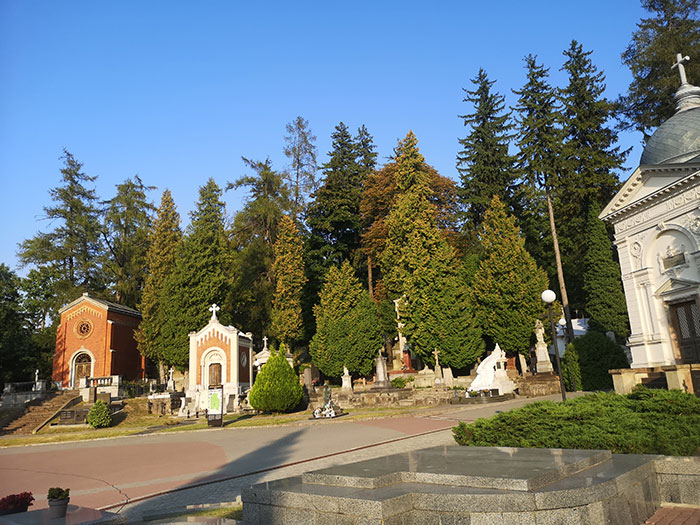
Today the cemetery has various stunning sculptures and architectural objects which are so beautiful to see. There are also war memorials, dedicated to:
– the soldiers of the Ukrainian Galician Army
– the Heroes who died in the russian-Ukrainian war
– the Ukrainian Insurgent Army
– the Alley of honour with the graves of the Heroes of the Heavenly Hundred, political prisoners, repressed, fighters for the freedom of Ukraine
– Polish military cemetery of the period of 1918-1920
I would suggest allowing at least 3 hours for a visit, even more. The main cemetery is ticketed, but the Field of Mars is not. I will share a couple of pictures from the cemetery before sharing pictures with the memorials.

This is one of the main mausoleums visible just as you enter the cemetery. This one, despite its cross, is the Jewish one. There are also Armenian and Polish and Ukrainian, representing the multicultural and diverse history of Lviv.
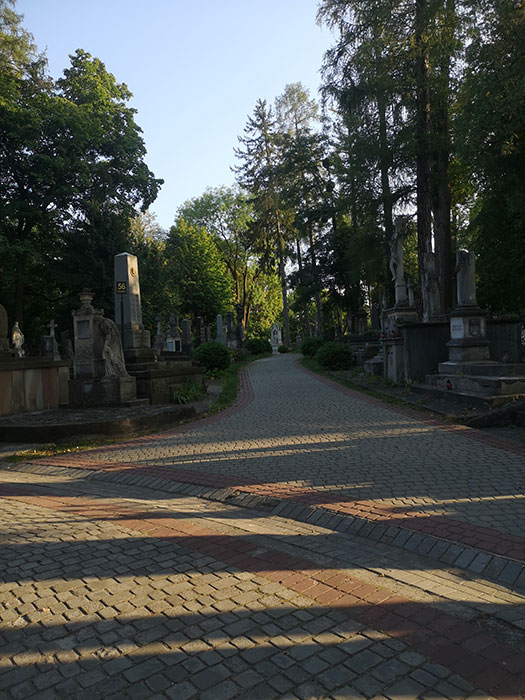
The paths in the cemetery are well kept and it is beautiful just to walk around and see the old tombstones.
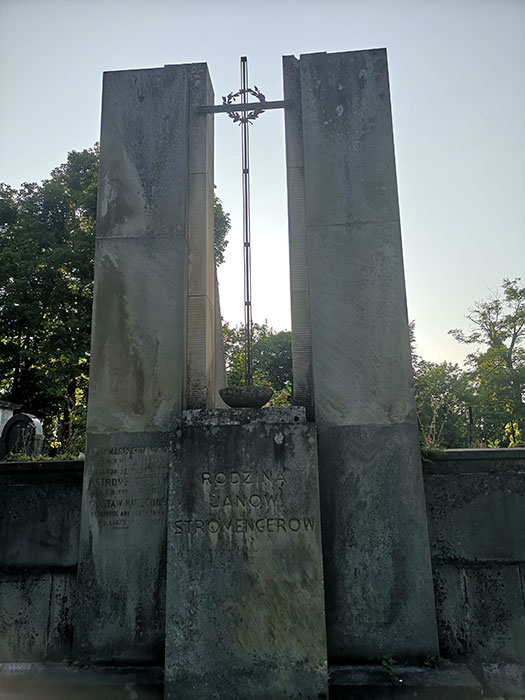
Some look modern, others look ancient, including a sarcophagus.
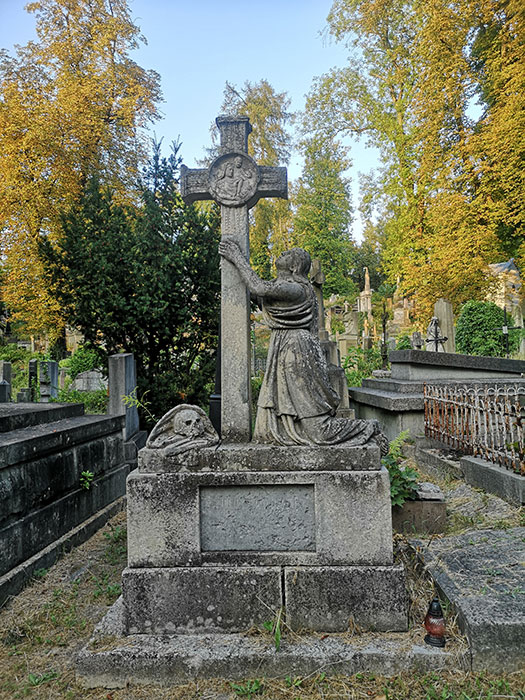
Next: the memorials
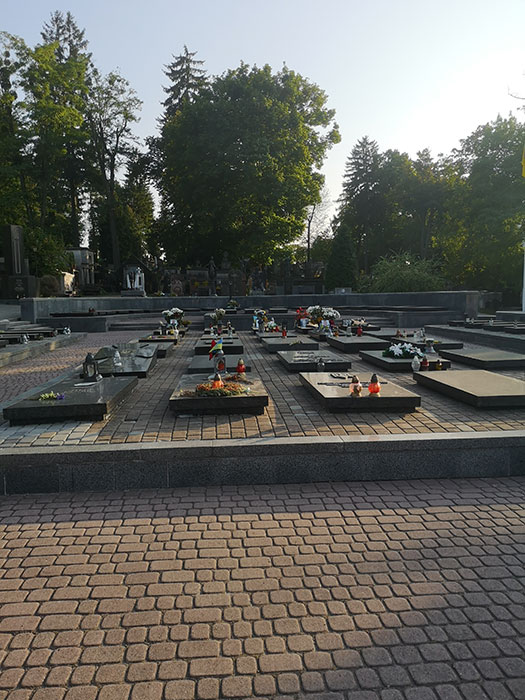
At the entrance is the first memorial, dedicated to the Heavenly Hundred Heroes (participants of the Revolution of Dignity). Four of them are buried in Lychakiv, one died in January 2014 and the other three in February 2014.
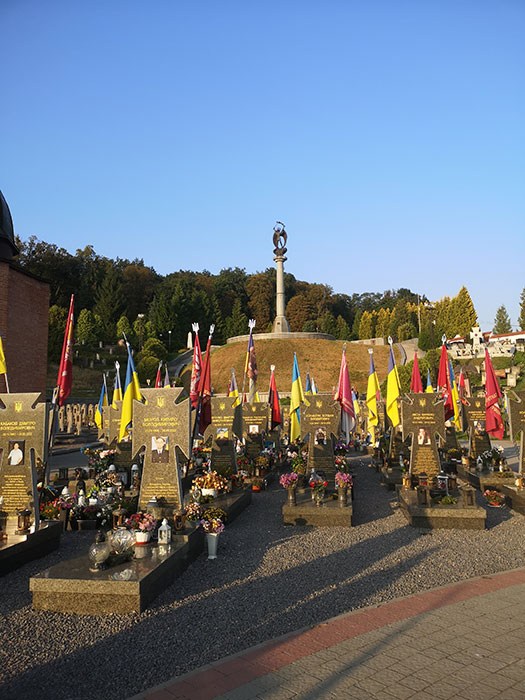
This is the Memorial of Heroes who died in the russian-Ukrainian war. Most of these tombs predate 2022.
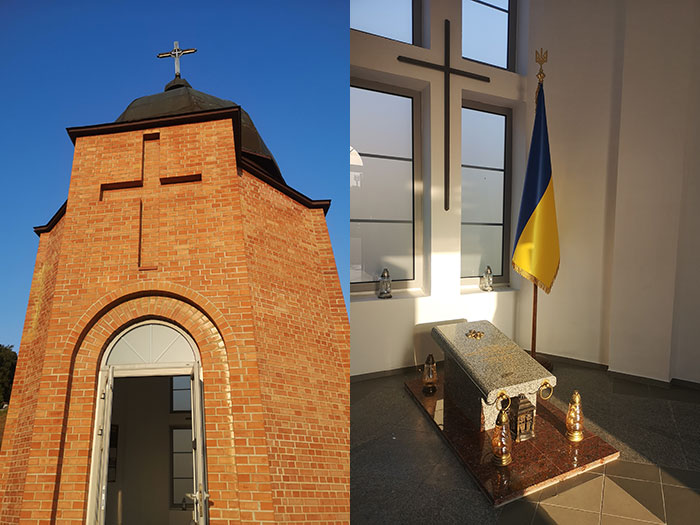
The memorial to Yevhen Petrushevych, the president of the West Ukrainian People’s Republic formed after the collapse of the Austro-Hungarian Empire in 1918. He fought for the self-determination of the Galician region, which was under the control of the Poles.
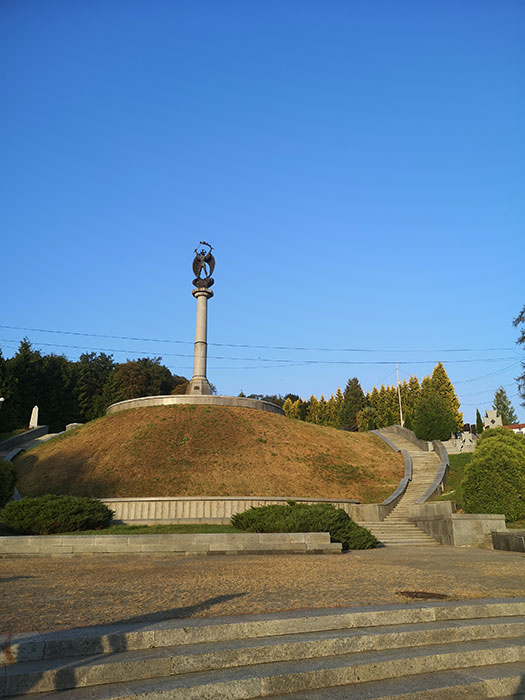
Memorial of soldiers of the Ukrainian Galician Army, who fought for Galician independence in 1918. There are four memorials, the one mentioned above and also dedicated to Oleksandr Tysovskyi, university professor and founder of Ukrainian Youth Scout Organization; Mykhailo Halushchynsky, the first commander of the Ukrainian Sich Riflemen; Dmytro Vitovskyi, Secretary of State of Military Affairs of the West Ukrainian National Republic (ZUNR).
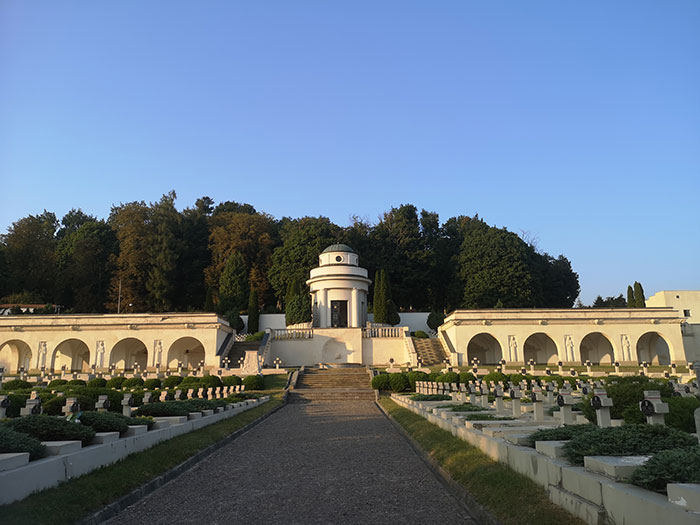
Polish military cemetery of the period of 1918 – 1920. This is one of the biggest pre-WWII military memorials built in Eastern Europe. 2,859 people are buried there. A few died in 1919-1920 in the battles against the Bolsheviks, while the rest were soldiers who died a natural death in 1920s-30s.
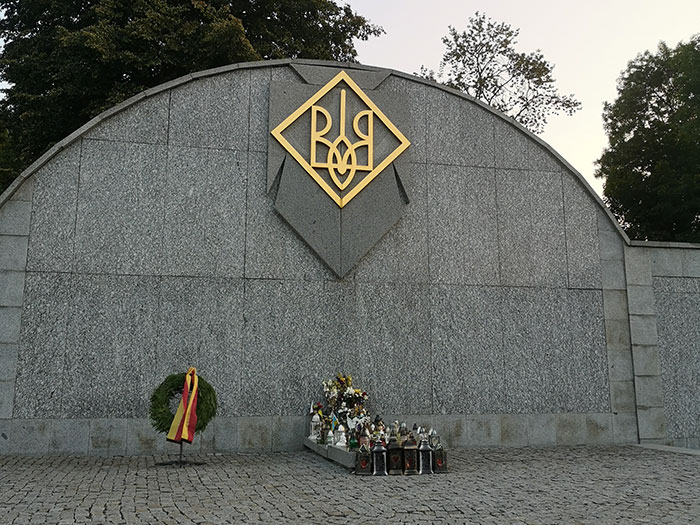
The Wall of Memory of the Ukrainian Insurgent Army was built in 2007 with the crypts for burials of fighters for the Freedom of Ukraine. In 2008 the remains of the unknown soldier of the Ukrainian Insurgent Army was buried in the central crypt.
The Ukrainian Insurgent Army fought the Nazis and the soviets and the Poles.
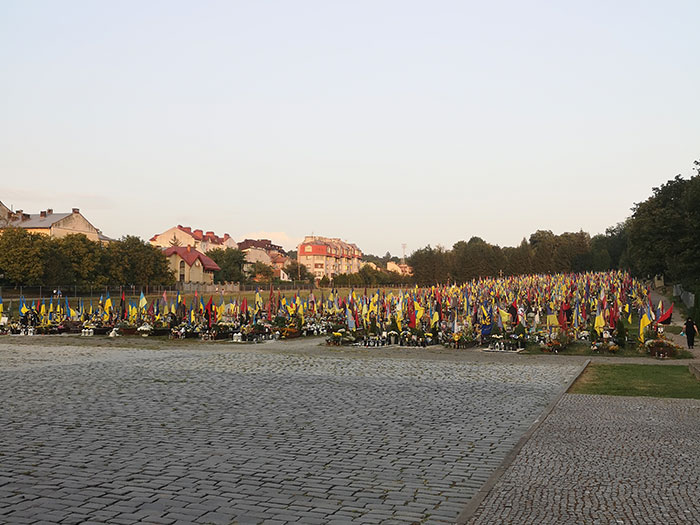
Field of Mars, where the new graves are being dug, for the fallen soldiers in the russo-Ukrainian war. There used to be a memorial to the 3,800 soviet soldiers who fought against the Nazi occupiers during World War II and against units of Ukrainian Insurgent Army (UPA). The soviet praising inscription was removed in the 1990s. In August 2022 the decision was taken to exhume the soviet soldiers and move them to another cemetery in Lviv, which is not military. During the exhumation they were found remains dating back to WWI, soldiers of various armies: German, Austro-Hungarian, Ottoman, and russian.
I was expecting to be moved by the new graves, of fallen soldiers in the latest russian war against Ukraine. I kept postponing going to the cemetery until another volunteer and I went there. He was too postponing going there because of the sadness of the place. Another volunteer went on the following day and when he visited a burial was taking place. He stayed for the burial to show his respect and spent a few hours at the cemetery.
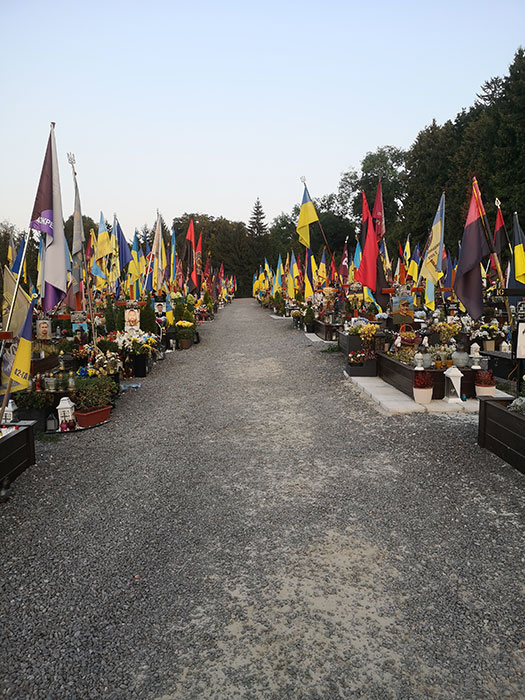
This place is unusual for a military cemetery, in which only the wooden markers are similar and the crosses, but the families were allowed to make the tombs as they wanted. All put a Ukrainian flag, naturally, but others decided for the unit’s flag or the red&black flag. Some tombs are decorated with pebbles or stone, white, black, yellow&blue. Some tombs have artificial grass on them and artificial flowers. Some tombs have natural plants, like lavender or chrysanthemums. Some have a cross necklace wrapped over the picture of the defender. I saw a tomb with a drink and a snack left there, another one or two with the scarfs of the football teams they supported.
Even the pictures were different, ranging from the military pose in camo to a picture with the soldier and his dog.
It was so sad to see them, but I think it is a must for anyone who is in Lviv for more than a few days. We should all be aware of the real cost Ukrainians are paying for their freedom.
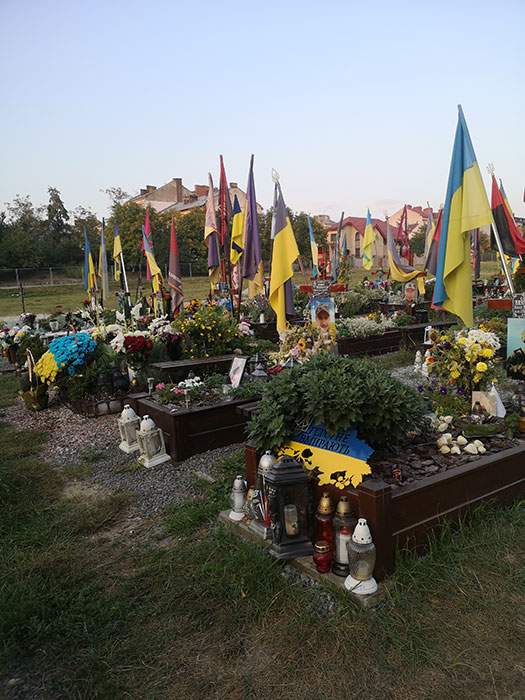
All three of us said that the hardest part of seeing the cemetery was not what we’ve expecting, the tombs, but the empty space besides them, which might get filled up if we don’t do more to help Ukrainians win the war sooner. You can see the space in the background.
Slava Ukraini!





What an interesting place to visit. The cemetery sounds huge and looks beautiful. It really is a big part of history and I imagine so sad with burials still happening.
Kim Carberry recently posted…Autumn farmers market guide: What to buy and how to use it!
It looks like quite an impressive cemetery and I find it interesting that it’s a museum as well. So much history! I have mixed feelings about cemeteries, but that might be because I want to be cremated and scattered rather than buried. Your last part about the empty spaces is quite poignant.
Kelly recently posted…2024 extras #7 📚
There are so many important people buried in this cemetery, from artists to politicians, the military part is also important, the architectural parts are also important, and the statues (soviet vs older version and newly made ones, since the 1990s). I think even 3 hours might not be enough to see all.
Yes, the empty space, the thing none of us thought would affect us the most.