
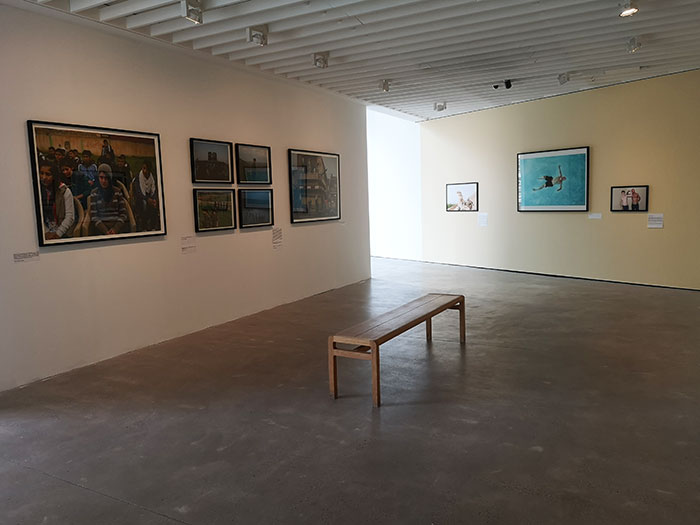
No iconic images at the Open Eye Gallery in Liverpool is a special exhibition. The exhibition just opened on 20 Mar and it will be on until 4 May. I highly recommend a visit. It is a free exhibition and it is so interesting. The exhibition is hosted in 3 different rooms, each with its own theme.
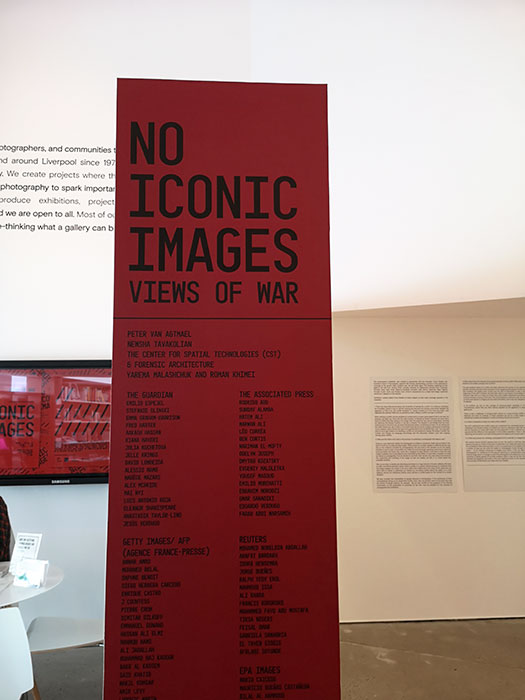
The idea behind this exhibition is to question the relation between iconic images and war photography. These images are iconic, easily remembered by a lot of people, who can influence how any war is perceived when is happening or remembered after it ended. The politicians and media are influenced by what they are seeing, as all of us, so these iconic images are too shaping the public discourse and decision.
The exhibition questions what are the iconic images today and if any of us really need them.
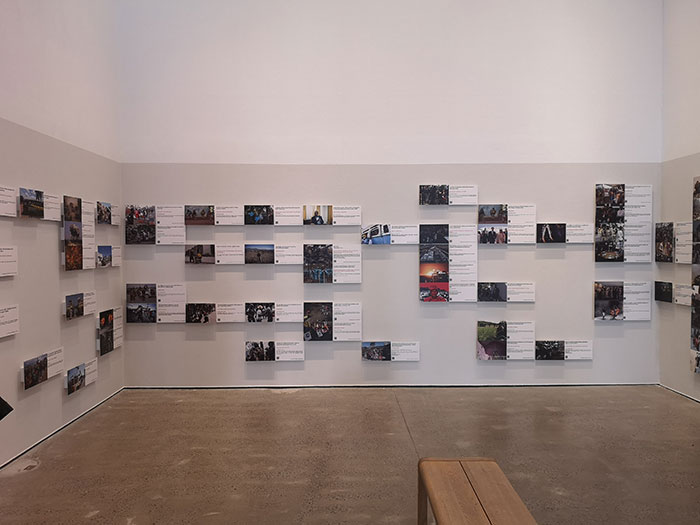
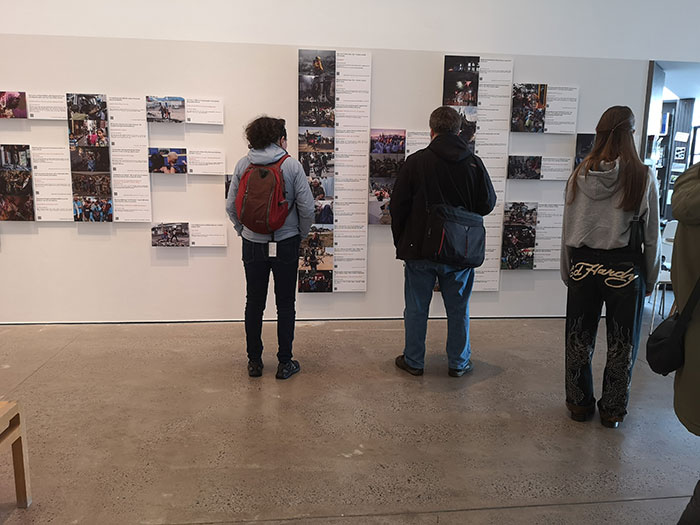
On the ground floor it is a chronological series of photos that were published. So this shows the decisions made by the Guardian’s journalists and editors when working with war photography today. These were curated by the team working there, so it offers their views of conflicts around the globe, from the Americas to Asia.
I like that the picture was as big as the description because that description was so important. It was included how many articles there were in the newspaper in the month in which that particular image was published. It showed the disparity between the many hundreds of articles on Gaza/Israel, the hundreds of articles on russia’s attacks on Ukraine, and only a handful of articles on countries such as Sudan. Even the disparity between the number of articles on Gaza/Israel when compared to Ukraine was easy to see.
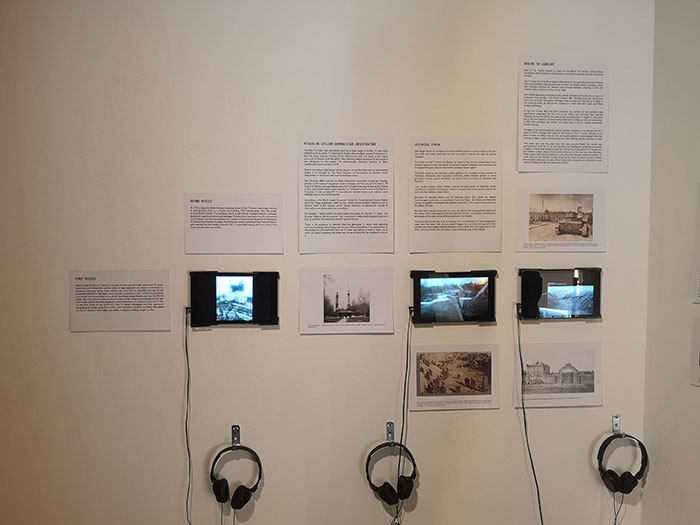
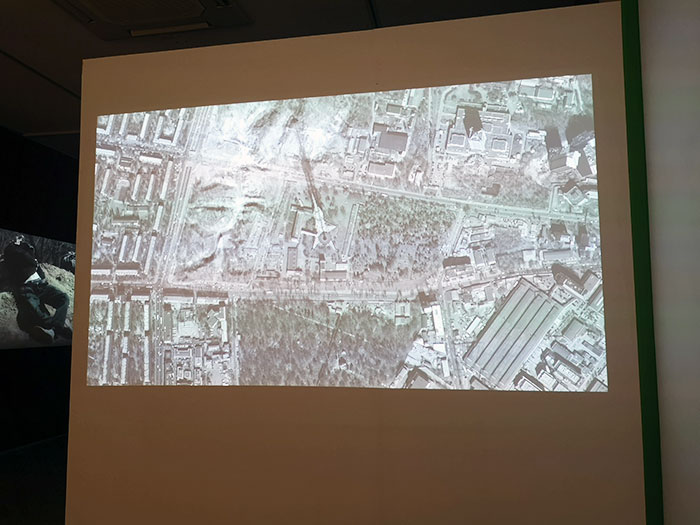
The Forensic Architecture and the Centre for Spatial Technologies presented their fascinating investigation of the 2022 attack on Kyiv TV Tower. It is a short film, pictured below, which is so worth seeing.
In the back there was another room with a few clips. Two artists, Yarema Malashchuk and Roman Khimei, challenge the western aesthetic tradition in representations of the dead. It was an interesting display, of sorts, too clean for me.
In my view, to properly challenge the western representations of the dead, I think some real pictures from Ukraine would have been better. But, it is an exhibition which is for the general public and I see things that are brutal. For example, I was talking with another volunteer about a specific attack and I asked if they knew the girl mentioned in an article. They knew exactly who I was talking, like me, they are going regularly to Ukraine. That picture of the girl was deemed too brutal to be shown in newspapers in UK. While I understand why, it also creates a distorted view of war. War is not just “sad”, is more than that.
If many of us can’t even look at some pictures to bear witness, it’s not up to us to say how peace should be achieved.
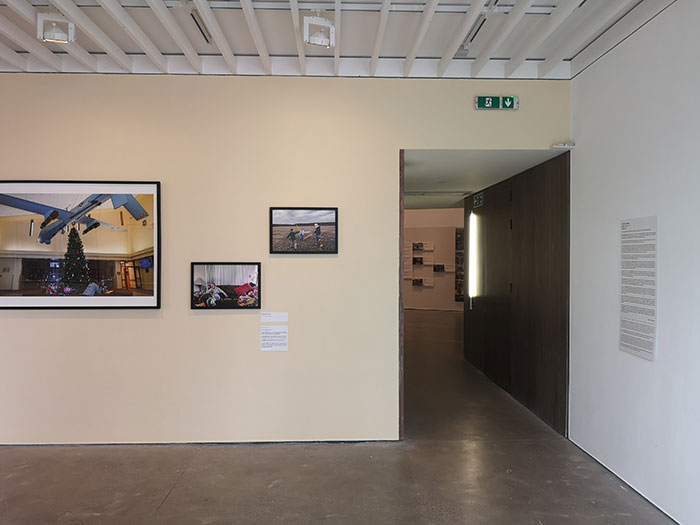
The exhibition has a few pictures, projects by photographers Peter van Agtmael and Newsha Tavakolian. They are sharing their perspectives on the wars, as they have witnessed in Iraq, Afghanistan, and Syria.
Do visit it if you can. It is fantastic.



What a great exhibition and a bonus that it is free. It looks so interesting. x
Kim Carberry recently posted…This week my Word of the Week is: Phone! #WotW
Oh wow – that looks to be a wonderful exhibition!
I can see how this would be a powerful and interesting exhibit. I can think of a number of iconic images from WWII and the Vietnam war that will never leave me.
Kelly recently posted…Instagram Photos #47
I have some “iconic” images as well. This exhibition was on pictures that are not iconic, which was a very interesting perspective. It is a fascinating way to look at war and journalism.